

Updated September 2026
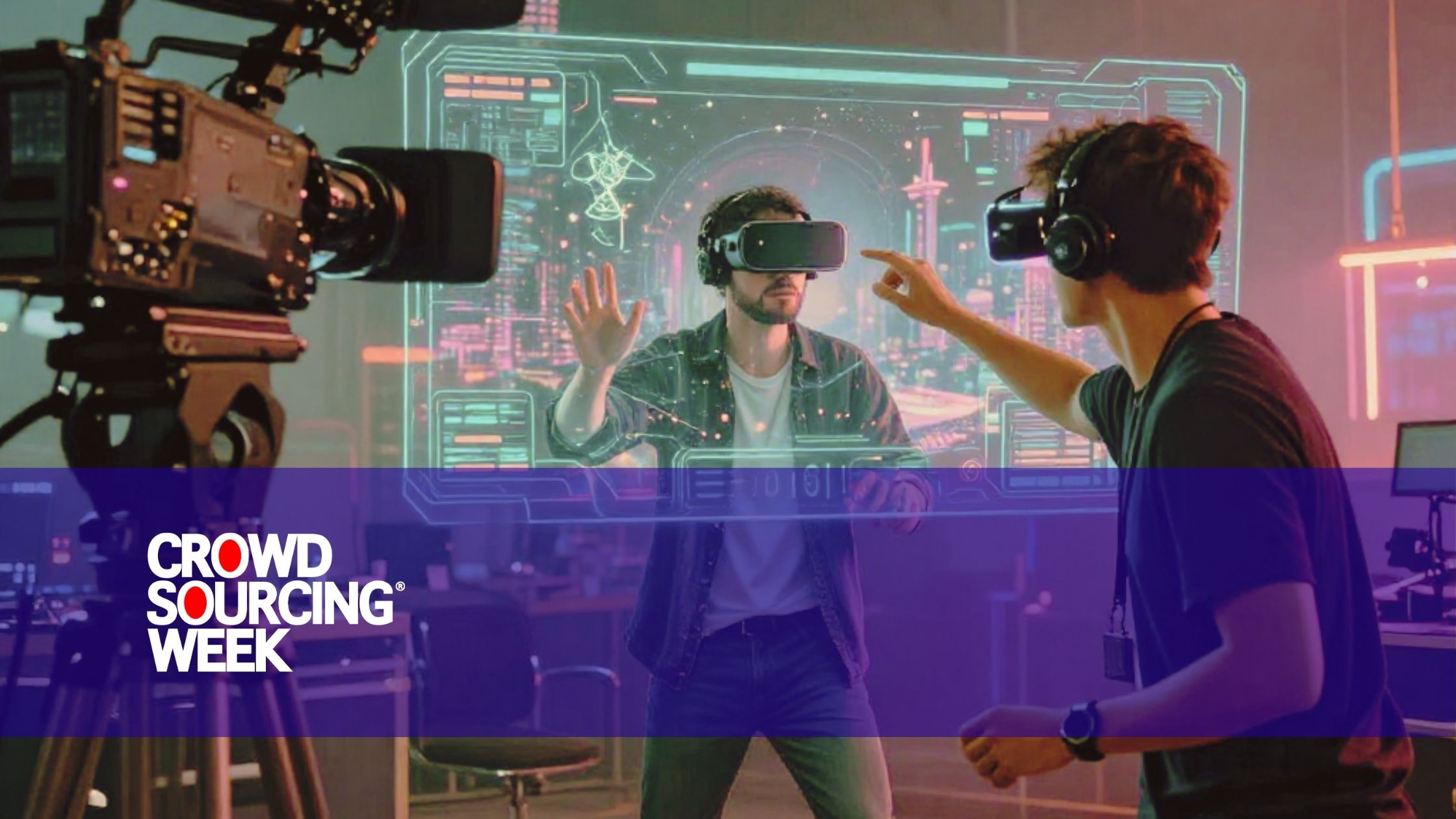
AI tools for creators have rapidly transofmed what was once a bedroom livestream or a one-person vlog into hybrid production systems and content factories, rivaling the output of small though highly polished production houses. Yet unlike traditional studios with teams of editors, designers, producers, and sound engineers, today’s creators are often solo or small teams. They are empowered by augmented collaboration with emerging technologies that perform as team extensions, rather than mere tools. This enables them to work not only faster to more easily replicate the output of larger agency or in-house client teams, but also to handle mass crowdsourced data.
At the heart of this transformation is augmented collaboration: workflows where artificial intelligence and human creativity work in tandem to produce content that is faster, richer, and more scalable than ever before. For marketers, understanding how AI for creators and hybrid production studios operate is key — not just to reach audiences with high-quality content, but to rethink what production scale means when time, cost, and manpower are no longer the traditional constraints that they used to be.
This article explores that new landscape. First, we’ll outline some AI-augmented workflows that harness AI tools for solo creators to operate at “studio” scale. Then, we consider a cross-section of AI-powered tools for creators that also enable them to collect, filter, refine, and elevate crowd contributions into polished content experiences. The use of crowdsourced input further helps creators meet the E-E-A-T expectations (experience, expertise, authenticity and trustworthiness) of algorithm search criteria.
For marketers, the crowd involvement represents a further radical opportunity. Community engagement no longer ends at comments or likes. It becomes structured co-creation. We therefore spotlight 10 examples of Crowd plus AI co-creation, demonstrating real methods where human ingenuity, crowd content and machine capabilities fuse to create compelling work.
Finally, we’ll address the very real challenges and ethical concerns that come with this era of hybrid creative production.
AI-Augmented Workflows That Enable Studio-Scale Production
Tools matter, but how they are integrated into workflows is what drives real productivity. Here are five workflows that demonstrate how creators, and the marketers who commission or employ them, operationalize AI:
1. Script to Screen in Minutes
A creator starts with a marketing brief in Notion AI (a planning and knowledge management assistant), generates a script with ChatGPT, produces footage using Synthesia avatars, edits in Descript, and auto-shares social media cutdowns via Pictory.
2. Audience-Driven Content Planning
Use BuzzSumo to identify trending topics, draft narratives in Jasper, validate messaging with A/B prompts in ChatGPT, then schedule production blocks in Notion.
3. Multi-Format Content Repurposing
A creator can publish a long video interview and then automatically extract key segments using Descript. Those segments can be transformed into social media carousels in Canva. The same source material can also be extended into blog posts with the help of Notion AI. This workflow allows a single core piece of content to fuel multiple channels efficiently.
4. Localized Global Versions
A creator can begin by writing a base script. The script can then be translated using ElevenLabs voice presets and presented through multilingual avatars in Sythesia. Optimized regional versions of the content can then be published for different global markets. This approach enables scalable localization without requiring a separate production team in each region.
5. Thumbnail and Hook Micro Testing
A creator can generate multiple thumbnail variations using Midjourney and Canva. These variations can be tested with small audience segments through analytics and performance testing tools. The highest performing versions can then be selected for broader rollout, increasing the likelihood of engagement and click-through success.
Now that we’ve seen the broad picture of the workflows, let’s look in a little more detail at the specific AI tools for creators we mentioned.
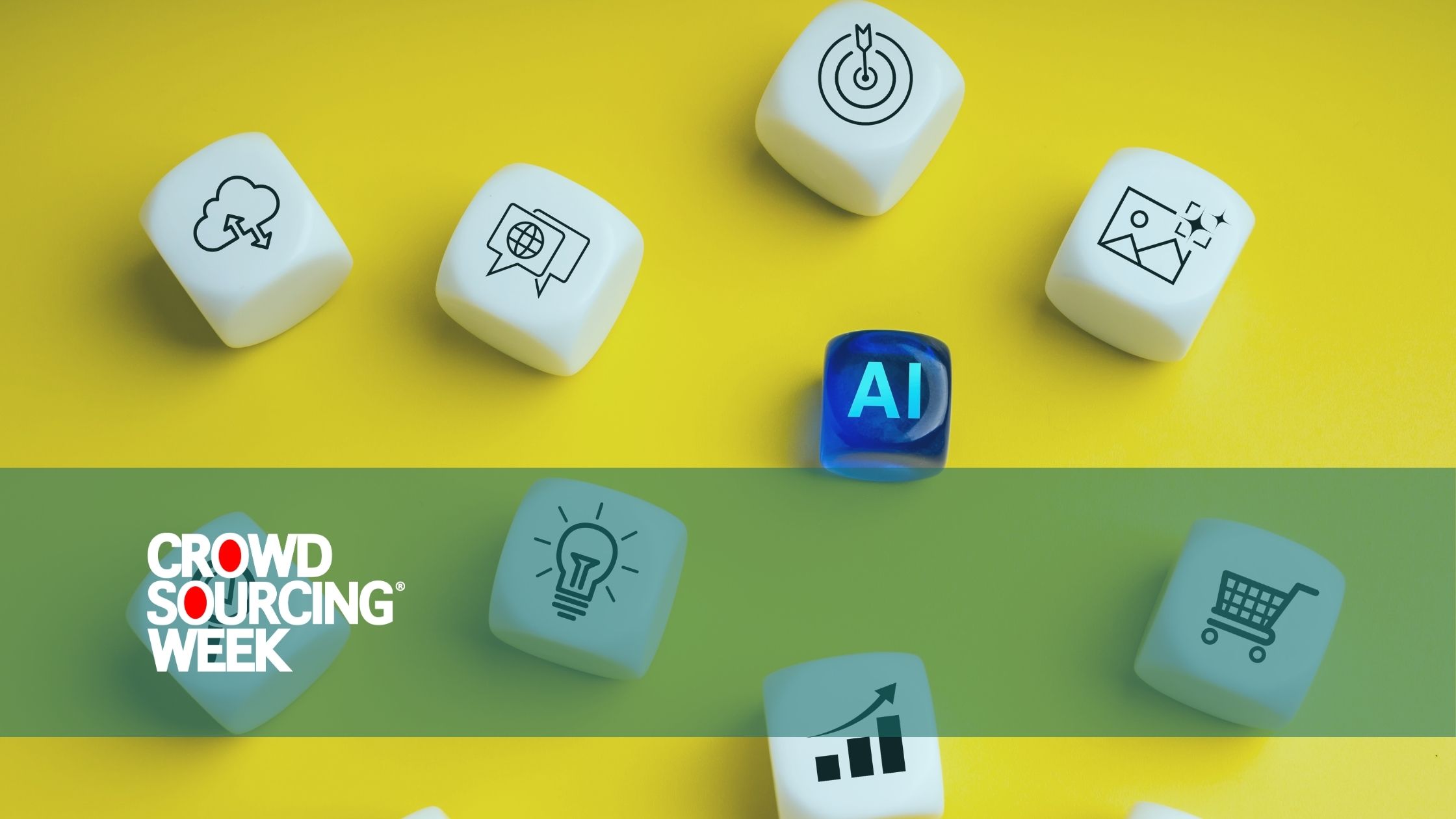
20 AI Tools for Creators Powering Hybrid Production Studios
We do not claim these are the 20 best or most renowned AI tools for content creators in the hybrid content production sector. Yet between them, they play a distinct role in automating or enhancing traditional stages of creative production, from the initial ideation through to content distribution and follow-up analytics. They are actively used by creators, YouTubers, podcasters, and content marketers; they have intuitive interfaces (not just research models), and can realistically be integrated into existing workflows without heavy engineering.
Script and Story Development
1. ChatGPT
A generative language model used for outlining, drafting scripts, refining tone, building campaign narratives, and generating multiple creative variations quickly. For marketers, it operates as a rapid ideation partner and messaging lab.
2. Jasper
Built specifically for marketing teams, Jasper transforms briefs into campaign scripts, advertising copy, landing pages, and brand voice aligned content at scale.
3. Sudowrite
Designed for storytelling, Sudowrite helps creators expand scenes, develop characters, and overcome creative blocks, making it useful for narrative-driven brand content.
Video Creation and Editing
4. Descript
An editing platform that allows creators to edit audio and video by editing text transcripts. It includes filler word removal, voice cloning, and multi-track capabilities.
5. Runway
Runway provides background removal, motion tracking, object erasing, and generative video features. It brings advanced visual production within reach of solo creators
6. VEED
VEED is an AI video generation and editing platform that helps users turn text and ideas into engaging videos. It offers AI-powered video creation, avatars, voiceovers, subtitles, and editing tools, making it easy to create professional-looking content for social media, marketing, training, and more.
7. Synthesia
Enables users to create presenter-style videos using digital avatars and multilingual voiceovers generated from text. This is especially valuable for training, product demos, and localized campaigns.
8. Pictory
Transforms long-form videos or written content into short social clips. It allows marketers to multiply distribution across platforms with minimal additional effort.
Visual Design and Image Creator AI
9. Canva
A widely adopted design platform enhanced with artificial intelligence features that generate layouts, images, and written copy. It supports brand consistency across social and advertising assets.
10. Midjourney
An image generation system used for concept art, thumbnails, mood boards, and advertising visuals. It accelerates creative experimentation.
11. Stable Diffusion
An open source image generation model that can be customized for brand specific visual styles, offering flexibility for agencies and in-house creative teams.
Audio and Voice Production
12. ElevenLabs
Produces natural sounding voiceovers, with emotional nuance and multilingual capability. It supports rapid scaling of podcast and video narration.
13. AIVA
An AI music composer that generates original background scores aligned with specific moods, pacing, and themes.
At this point, the original article included Adobe Podcast in the numbered list. It enhances voice recordings by reducing noise and improving quality, allowing remote recordings to reach professional quality standards. However, Adobe is integrating Adobe Podcast into its Firefly plans. Since August 30, 2026, Adobe Podcast Premium is no longer sold as a standalone plan to new members. The name "Adobe Podcast" itself hasn't changed, but it is effectively being absorbed into Firefly as Adobe Firefly Pro plan.
Planning and Knowledge Management
14. Notion AI
Assists with summarizing research, generating outlines, and structuring editorial calendars. It acts as a central intelligence layer within content operations
15. Trello
When paired with automation features, Trello supports structured production pipelines and repeatable campaign processes for distributed teams.
Optimization and Distribution
16. VidIQ
Provides data driven recommendations for titles, tags, and keywords to improve discoverability and channel growth.
17. TubeBuddy
Offers performance testing, search optimization insights, and thumbnail experimentation tools for video marketers.
18. LatelyAI
Generates social media posts from long form content and predicts engagement patterns using machine learning.
19. BuzzSumo
Identifies trending topics and high performing content across industries, helping marketers align creative production with audience demand.
Analytics and Performance Intelligence
20. Google Analytics
Provides audience insights and predictive signals that inform content strategy and campaign optimization decisions
.
10 Crowd plus AI Co-Creation Examples
In addition to providing solo creators and small teams with tools to enhance production values at pace and scale, these cocreation examples align with Crowdsourcing Week’s 2026 theme of human-tech collaboration. They demonstrate how collective human contributions and AI augmentation interact through the use of AI tools for content creators.
1. Community-Sourced Story Prompts
When a brand invites its audience to submit narrative ideas via social media, AI clusters themes and drafts scripts for creators to refine.
2. Open Caption Correction
Fans correct AI-generated captions for accessibility; the corrected output trains the next generation of the creator’s captioning model.
3. Collaborative Idea Boards
Creators use Notion public boards where followers vote on content ideas, and AI surfaces the most engaging combinations.
4. Remix Challenges
Audiences submit clips that AI remixes into collective highlight reels, blending human moments with automated sequencing.
5. Voice Model Training
A community provides voice samples for optional custom vocals, which creators use to produce regionally localized AI voiceovers.
6. Hashtag Innovation Workshops
Participants suggest and rank hashtags. AI then predicts reach and suggests optimized variants that the community then deploys.
7. Crowd-Curated Playlists
An audience curates its favorite music snippets, allowing AI to stitch transitions and generate promotional videos around them.
8. Co-Developed Brand Assets
Open design submissions feed into Midjourney prompt banks; the AI refines them into professional visuals that reflect community aesthetics.
9. Feedback-Driven Iteration Engines
Followers submit feedback; AI aggregates sentiment and suggests iterative styles or pacing for future videos.
10. Collaborative Learning Paths
Creators and learners co-build a knowledge repository, and AI augments it with explanations, examples, and personalized paths based on learners’ inputs.
7 Challenges & Ethical Concerns in AI Creative Workflows
While the promise of hybrid human and AI augmented collaboration is alluring, it is not without challenges. This is especially true when marketers are responsible for brand integrity, audience trust, and legal compliance.
1. Authenticity & Creative Attribution
When AI generates scripts, voices, or visuals, a key issue is “who is the true creator?” Audiences increasingly value authenticity, and transparent crediting matters.
Marketers thus need frameworks for creative attribution that acknowledge AI assistance without undermining human authorship.
2. Bias & Representation
AI models reflect the data they are trained on, which can include societal and cultural biases. Left unchecked, this produces stereotypes or exclusionary content. Human oversight, especially when using diverse teams who could work to different social and cultural norms, is essential to vet AI outputs for fairness and inclusivity.
3. Copyright & Intellectual Property
AI-generated media blends existing content that has often been scraped by large learning models. The legal landscape around ownership of AI-created work, with its plethora of claims of copyright infringement, is evolving rapidly. Legal risk is no longer theoretical, it is an operational hazard.
Marketers must collaborate with legal experts to put measures in place that ensure content doesn’t inadvertently infringe on protected work or default rights. Brands must be protected from reputational harm that infringement could cause. This will include matters such as which AI tools are approved for use by a team, what types of prompts are prohibited (e.g. “write in the style of a specific author”), and how the AI-generated outputs should be reviewed before using them. This will include the avoidance of using instructions that request imitation of identifiable copyrighted works.
Legal teams may require that hybrid studio systems can use only enterprise-licensed versions of AI tools for client-facing campaigns. Ultimately, a human review layer is generally essential.
4. Privacy & Consent
AI tools that analyze audience data or generate “deepfake” likenesses risk infringing on privacy or consent standards, and offending public opinion.
As with copyright and intellectual property, clear policies, opt-ins, and ethical guardrails should be integral to production workflows.
5. Quality Control & Brand Safety
A further reason for establishing a set of proper checks is that AI can produce outputs that are off-brand, factually incorrect, or culturally insensitive.
Workflow checkpoints and editorial standards should remain human-centric even when production scales. Otherwise, the automated processes would become self-regulating according to their own criteria.
6. Job Displacement vs. Skill Amplification
Automation can compress roles, allowing specialists such as editors, sound engineers, and writers to perform additional functions. However, this also raises concerns about displacement of other experienced professionals. Many hybrid studio systems repurpose talent into higher-value creative leadership and strategy roles, rather than eliminate them from the processes. AI does not replace them, it allows them to do more and achieve greater professional potential
7. Over-Optimization & Homogenization
AI likes to please us. If something works well, it can encourage itself to inadvertently push more solution-seekers toward formulaic structures (e.g., clickbait patterns), thus reducing originality across the ecosystem. Consequently, marketers must accept the challenge of balancing data-driven optimization with strategic differentiation and experimental risk-taking.
Conclusion: Humans in the Loop, Always
The age of augmented collaboration is not one of AI replacing creators; it is AI amplifying creators. For marketers who decide to work with them, this shift unlocks remarkable scale and speed. It enables campaigns that once required whole studios to be executed by individuals or agile teams. However, it also requires a strategic mindset that blends technological fluency with ethical stewardship and audience empathy.
Hybrid production studios, where humans guide AI with intention and context, will define the next generation of content ecosystems. Those who master this balance will not only produce more, they will produce better, more resonant work that audiences trust and engage with.

0 Comments