


A major paradigm shift is underway in the creation of value, and many organizations are not yet fully aware of it.
Decentralized innovation has changed the standard approach to innovation that prevailed for most of the 20th century. The traditional approach is to recruit smart individuals, place them in a room, and effectively lock the door. This closed innovation has been a feasible strategy for decades. Knowledge was treated as a proprietary asset, R&D was conducted behind closed doors, and competitive advantage was created through the "doing things inside the building" approach.
The closed innovation model is coming to an end. Not due to a decline of intellectual ability “inside buildings”, but because the outside world has evolved into a vastly more powerful and more accessible place.
Today’s crowds are better connected, better skilled and better equipped than any time before in history. AI has magnified people's impact. New types of coordination are emerging via decentralized platforms, without the need for a corporate headquarters. A generation of creators has grown up around the public sharing of knowledge for millions of people to access and use to make their economic living.

Since the first publication of the concept in 2003 by Henry Chesbrough in his landmark book Open Innovation, there has been a growing trend of purposefully seeking ideas, know-how, and solutions from sources outside the organization.
The premise was radical in its day: not everybody on your staff is smart, which can be a concealed liability. Unused knowledge and ideas from the outside were suspicious, and ideas from the inside were quietly collected and filed. Open innovation turns that on its head.
Individually, each of these trends are intriguing. Together, they paint a picture of a new business model based on decentralized innovation and the collective intelligence economy, In this model, the most valuable innovations are more and more created where human crowds meet with AI systems, creator networks and decentralized infrastructure.
This is not a 'theoretical' way of thinking. In organizations where innovation is a critical business driver in order to remain relevant, it is a strategic necessity.
What are they saying by Collective Intelligence? What does Collective Intelligence mean?
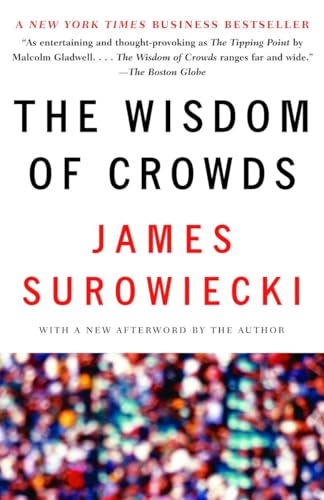
Collective intelligence is the ability to solve problems, learn and think, as a group, better than a single person would. It's not new. It's at the core of Wikipedia, the open-source software movement and the wisdom of the crowd, as made popular in James Surowiecki's 2004 book "The Wisdom of Crowds.”
Scale and infrastructure have changed. Twenty years ago it took a lot of effort to leverage collective intelligence: building platforms, community moderating, aggregating inputs. The infrastructure is in place, the crowds are already prepared and much of the synthesis work to connect the two can be done by AI to harness decentralized innovation.
The outcome of all this is that collective intelligence has gone from being a novelty tactic to a business-as-usual operating model that is accessible to any organization, no matter its size.
The four forces shaping decentralized innovation
There is no single trend that is pushing the collective intelligence economy. It is a result of four forces coming together at the same instant.
1. The Crowd
Global platforms have developed clusters of expertise, which were simply not available on a scale like that before. There are more than 15 million data scientists on Kaggle working to solve actual problems. Wazoku, (which acquired InnoCentive) can offer thousands of "solvers" to help organizations that have technical challenges they can't solve themselves. Topcoder runs continuous competitions in software development and design.
These aren't weekend hobbyists. Many of them are domain experts, folks who are not on your payroll, such as researchers, engineers, and clinicians. This is the basis of Chesbrough's open innovation model, which he developed, that knowledge and capabilities an organisation requires are almost always outside itself. The big question is whether you have a method to get hold of them.
More and more, the response is “Yes.”
2. The Creator
The creator economy is commonly talked about in terms of YouTube channels and brand sponsorships, though there is a more substantial dimension that organizations miss out on. It is a huge, self-made network of experts in their respective areas who have created an audience by sharing their expertise.
Creators contribute to decentralized innovation in a variety of ways. A machine learning engineer who publishes a weekly newsletter with 40,000 readers (practitioners). A supply chain consultant who has built up a large following of operations professionals. A medical scientist creating explanatory content on novel treatments.
In essence, these people have become nodes in a knowledge network, and are trusted intermediaries that spread and validate knowledge on par with specialist media.
This creator economy is worth more than $250 billion and much of it is through the sharing of expertise on a large scale. Focusing on knowledge creation, we have seen organizations learn how to work collaboratively with creators beyond marketing for access to audiences and expertise that they can't replicate in-house. This can include B2B markets.
3. Artificial Intelligence
Collective intelligence is not being replaced by artificial intelligence. AI amplifies it.
The stumbling blocks to crowd innovation at scale were primarily issues of synthesis: What do you do with thousands of ideas? How can you determine the good signal in a noisy set of contributions? How does an organization take on the know-how of a community with many knowledge holders?
Large language models and other AI tools are now starting to provide answers to these questions. They are able to collate and summarise thousands of submissions, identify patterns in a distributed data set, rapidly move a community-generated insight into a prototype, and guide organizations to ask the right questions of their communities from the outset.
The findings of MIT's human-AI collective intelligence research are important for the design of innovation processes in organizations: coming together, human judgment and AI processing work better together than either one does alone. The question is not whether or not to engage either the crowd or AI, it is about how to best merge them in a hybrid intelligence system.
4. Decentralization
The blockchain and decentralized technologies have been a hot topic in the public conversation for a few years now, but it hasn't always been smooth sailing. Cryptocurrency speculation has often taken precedence, though it obscures the more solid process that's underway within decentralized innovation. The building of new infrastructure enables communities to coordinate, govern and generate value without the need for a central authority.
Decentralized Autonomous Organizations (DAOs) are organizations that are governed by the decision making of all the token holders within the organization, instead of a leadership team.
They have tried everything from funding Open Source software to handling investment portfolios.
- Through a community vote, MakerDAO rules a multi-billion-dollar stablecoin protocol.
- Gitcoin distributes funding to open-source developers through quadratic voting, a mechanism designed to reflect community preference more accurately than simple majority rule.
Most of these models are still very young and many attempts have not succeeded. However, they are also raising a host of interesting challenges with respect to how collaboration and data cooperatives can be organized on a large scale without a dominant central authority.
DePINs (Decentralized Physical Infrastructure Networks) enable direct interaction and collaboration between infrastructure providers and consumers, instead of relying on centralized authorities. Decentralized control can broaden the ways infrastructure (energy, water, healthcare, transport management, and so on) responds to a population’s requirements, making it more accountable.
The place where the 4 forces meet
Of course the most interesting territory is not each force per se. It's the area where the four overlap.
Consider the new concept of AI-enhanced open innovation platforms. For years, organizations have been able to crowdsource ideas by tapping into their employees or communities through the use of tools that have long existed such as Brightidea, Ideawake, and Ideanote.
The change is that AI now automatically tags content, detects duplicates, scores the ideas against a set of criteria, and highlights clusters of similar ideas that a human could overlook.
There is an emerging class of creator-led knowledge communities that organizations are starting to work with in partnership for research and innovation. Instead of hiring a traditional consultancy firm, a pharmaceutical company could hire a group of researchers who have established a trusted community within a given disease area, who would provide both domain expertise and community validation.
At the frontier, decentralized science (DeSci) initiatives such as VitaDAO, which governs longevity research with community money, are testing the idea of decentralized gatekeeping in place of centralized research funding. It is early and the dangers are very real, though the direction of travel is irreversible.
What this means for your organization
The collective intelligence economy presents opportunity and competition.
No longer is talent limited by your organization chart. Through open innovation platforms, hackathons, and partnerships with creators, organizations have access to expertise they couldn't afford to hire, and perhaps would never find through traditional hiring methods,
Organizations that create systematic systems to obtain intelligence from external sources, instead of engaging them on an ad hoc basis, will make strides faster on challenging problems.
Collective intelligence infrastructure should be a part of AI investment. The emphasis is on efficiency, automating processes, accelerating analysis and speeding up the drafting of documents, with many organizations investing in AI tools for these inner-workings.
That's valuable, though the synergistic dividends could be the ability to process and synthesize crowd intelligence at scale with AI, and have it as an actual strategic asset in a community of contributors, rather than an occasional consultation.
Community is not a marketing channel, it's an innovation resource. Organizations with a healthy customer or partner base tend to look at them mostly as an audience. The more advanced approach is to consider that community as a distributed R&D unit and engage the community in the process of problem framing, solution testing and knowledge creation.
The creator layer is important as well: when you work with trusted voices in your industry, you get access to communities that you didn't create, but which can help you.
Governance models will have to change. The more organizations that start to adopt open and participatory innovation processes, the more significant the internal processes and structures become that determine which ideas are funded, which external contributions are recognised, and how value is shared.
Whether you consider the more esoteric aspects of the decentralization movement productive or not, it's providing some interesting ideas about how to build a fair, transparent, and scalable governance structure.
The organizations that will thrive
The collective intelligence economy doesn't eliminate the need for organizational capability. If anything, it raises expectations. To tap into and integrate distributed intelligence, one needs clarity on the problem being addressed, judgement to identify valuable ideas, and the maturity to take action on what is learned.
What it does change is the logic of competitive advantage. Closed innovation meant that the profit lay in building up knowledge; the more knowledge you possessed (as in the more knowledge you kept to yourself), the better.
However, in the open innovation model, particularly in the collective intelligence economy that's now coming out of it, the value now lies in access to knowledge and in its synthesis. The organization which can access the largest, most varied pool of intelligence and be able to translate it into action quicker than its rivals will be the winner.
That's a significant change. This is a basic rethinking of what it takes to be a ‘smart organization’ driven by digital transformation.
The collective intelligence economy is a reality. The issue is whether your organization can play a role in it, or if it will remain on the outside looking in.
What examples have you seen of organisations effectively combining crowd intelligence, creator communities, or AI to drive innovation? We'd love to hear what's working in your sector. Share your thoughts in the comments below.


0 Comments