



Answer-first search optimization has changed the shape of search. People still use Google, but they are increasingly getting answers from AI overviews, chat interfaces, and recommendation-style results that synthesize information from a wide range of sources.
Rather than relying on a single webpage, AI-generated search crowdsources the collective intelligence created by millions of human contributors across websites, expert publications, research, reviews, forums, and professional communities. AI acts as a synthesis layer, bringing together this distributed knowledge to generate concise recommendations. Instead of clicking through ten blue links, users are asking, “What’s the best option?” and expect a confident response in the context of answer-first search optimization.
That shift matters because AI-generated search results behave differently from traditional rankings. In classic search, visibility often meant securing a place on page one. In AI-led discovery, the real prize is different: being cited, summarized, or recommended as the answer. Rather than relying on a single source, AI systems increasingly identify patterns by synthesizing information from multiple independent sources before generating recommendations. This reflects a broader move toward collective intelligence, where credibility is reinforced through consistent evidence rather than individual claims.
For brands, this creates a more demanding standard. It is no longer enough to be present online. You need to be legible to machines and trustworthy to humans at the same time. AI systems tend to favour brands they can understand quickly, validate across multiple sources, and describe without ambiguity. If your brand story is scattered, inconsistent, or buried in vague marketing language, you make that job harder.
Why AI Search Relies on Collective Intelligence
Understanding answer-first search optimization is crucial for brands looking to enhance their visibility and engagement online.

AI-generated search results are built on synthesis. Rather than relying on a single webpage, AI systems aggregate knowledge created by millions of people across websites, expert publications, research papers, customer reviews, online communities, forums, open-source projects, and other trusted sources. This collective intelligence allows AI to identify recurring patterns, validate information across independent contributors, and generate answers with greater confidence. Instead of depending on one perfectly optimized page, recommendation depends on whether your brand consistently earns trust across this broader knowledge ecosystem.
Recommendation depends on clarity, not just visibility
A brand might rank well organically and still fail to appear in AI answers. Why? Because ranking and recommendation are not identical. Search engines can index a page for a keyword even if the brand’s expertise, use case, and differentiation are fuzzy. An AI system, however, must synthesize information drawn from collective intelligence across many independent sources before summarising your brand in a sentence or two. If it cannot confidently determine who you serve, what problem you solve, and why you are credible from this broader body of evidence, it may default to a competitor with a clearer and more consistent digital footprint.
This is why many SEO teams are now moving toward answer-first search optimization. The principle is straightforward: structure your online presence so that both search engines and language models can extract direct, trustworthy answers from it. That means clearer topic ownership, stronger supporting evidence, and content written to resolve specific questions rather than merely attract impressions.
AI Evaluates Distributed Trust Signals
Think of AI search as a system that evaluates distributed trust signals rather than isolated claims. It looks beyond your website to determine whether your expertise is consistently recognized across a crowd of independent sources. Editorial coverage, industry publications, customer reviews, professional communities, partner websites, and expert commentary all contribute to the confidence AI systems place in a brand. When these signals consistently reinforce the same positioning, recommendations become more reliable because they are supported by collective validation rather than single-source self-promotion.
The Signals That Make a Brand Recommendable
The brands that show up most often in AI answers tend to share a few traits. Not because they have “cracked the algorithm” but because they reduce uncertainty.
● They publish content that answers specific, high-intent questions clearly.
● They demonstrate expertise with proof: case studies, data, credentials, and named authors.
● They are mentioned by reputable third-party sources in relevant contexts.
● They maintain consistent positioning across owned and earned channels.
● They make their content easy to parse with clean structure, schema, and straightforward language.
None of this is especially glamorous. That is partly the point. AI search rewards brands that are easy to verify, not just easy to notice.
Collective Intelligence Strengthens AI Recommendations
AI systems increasingly rely on collective intelligence to reduce uncertainty when generating recommendations. Rather than depending on a single source, they compare information across multiple independent contributors to identify consistent patterns and establish credibility. This allows AI models to distinguish between brand claims and information that has been validated across the wider digital ecosystem.
For brands, this means trust is built through much more than their own website. Let me again emphasize that disparate sources, including research publications, industry commentary, customer reviews, community discussions, expert contributions, open-source projects, and collaborative initiatives, will all help reinforce credibility. When these independent signals consistently support the same expertise and positioning, AI systems can recommend a brand with greater confidence because the information has been corroborated from a crowd of multiple sources, rather than asserted by the brand alone.
This shift reflects a broader move toward decentralized intelligence, where recommendations emerge from the collective knowledge of many unrelated contributors, rather than a single authoritative voice. Brands that actively participate in these knowledge ecosystems are more likely to build the trust signals that AI-generated search increasingly depends upon.
How to Increase Your Odds of Being Recommended
Build topic authority around real decision points
Too many brands still create content around broad awareness keywords while ignoring the questions buyers ask just before choosing a provider. AI tools are often used at this later stage: “Which software is best for a five-person finance team?” “What agency should I use for local SEO?” “Which tool integrates with Shopify and Xero?”
If you want to be recommended, your content should map to those decision moments. Create pages and articles that compare approaches, explain trade-offs, define suitability, and state limitations honestly. Counterintuitively, balanced content often performs better in AI contexts because it reads as more trustworthy than copy that insists every solution is perfect for everyone.
Make expertise explicit
Many websites assume their credibility is obvious. It usually is not. If your team has specialist knowledge, show it plainly. Add author bios, cite original research, include dated examples, and reference real-world outcomes. Even small editorial choices help: a named expert is more believable than “our team”, and a specific result is more compelling than “we deliver growth.”
This is especially important in sectors where trust is part of the purchase decision, such as healthcare, finance, legal services, and B2B consulting. AI systems are cautious around claims-heavy industries. Evidence matters more there, not less.
Tighten your entity signals
One overlooked issue is brand ambiguity. If your company name is generic, similar to another brand, or described differently across platforms, you risk confusing both search engines and language models. Make sure your brand, services, locations, and leadership details are consistently presented. Use structured data where relevant, but do not treat schema as a magic fix. It works best when it reflects a genuinely well-organised web presence.
Reputation Now Shapes Discoverability
Traditional SEO has long treated reputation as adjacent to visibility. In AI search, the two are becoming intertwined. Reviews, testimonials, expert commentary, and editorial coverage do more than influence human buyers; they also provide external validation that models can draw on when forming recommendations.
That raises a useful question: what does the web say about your brand when you are not the one speaking? If the answer is “not much”, that is a discoverability problem. If the answer is inconsistent, that is a positioning problem.
Digital PR, founder visibility, specialist commentary, participation in open innovation initiatives, collaborative research, contributions to industry communities, and high-quality partnerships all strengthen the distributed trust signals AI systems rely on. These activities create independent validation across the web, allowing AI models to build confidence from multiple perspectives rather than relying solely on brand-owned content.
As AI-generated search continues to evolve, knowledge ecosystems will become increasingly important. Organizations that actively share expertise, collaborate with industry peers, and contribute to collective knowledge are more likely to establish the trust signals that influence AI-driven recommendations.
Measure Recommendation, Not Just Rankings
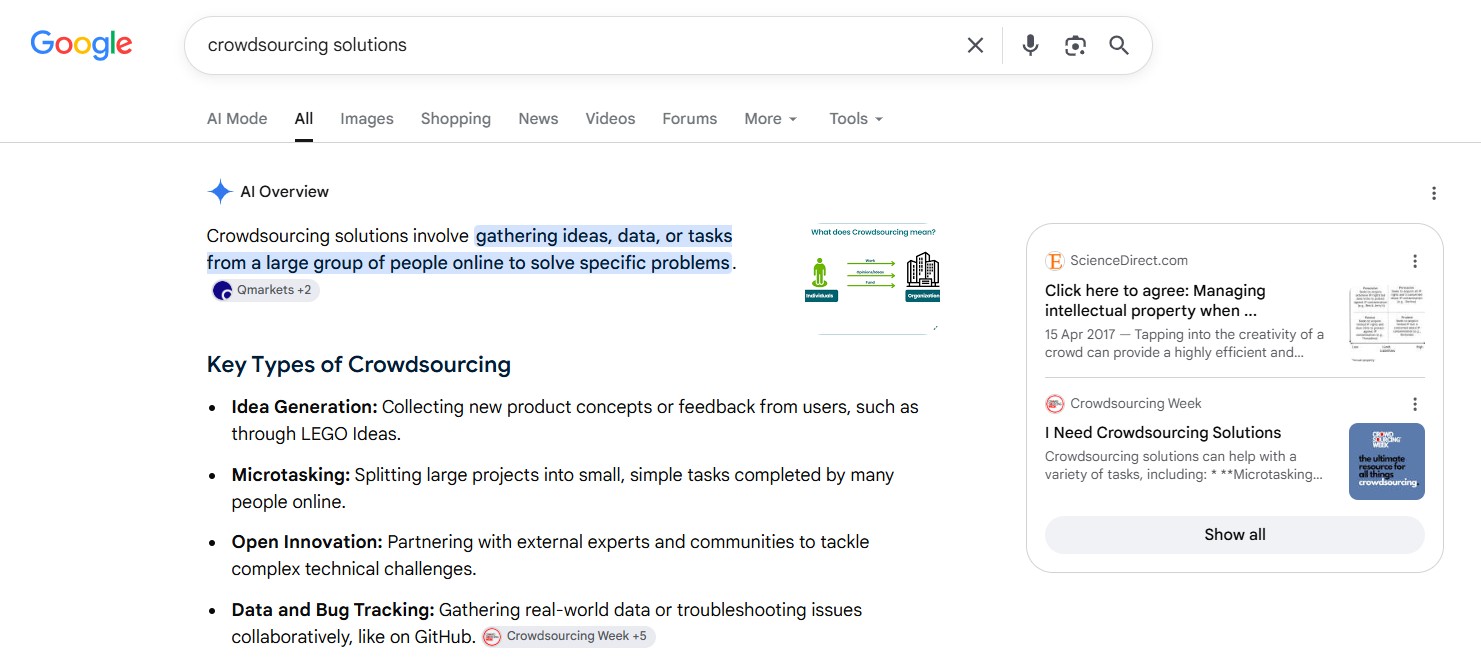
One final shift is operational. If your reporting still focuses only on keyword positions and organic traffic, you may miss the bigger picture. Start tracking whether your brand appears in AI overviews, answer boxes, chatbot citations, and “best of” recommendation prompts. Monitor the language used when your brand is mentioned. Are you being framed accurately? Are competitors being cited more often in your core category?
The brands that win here will not necessarily be the loudest. They will be the easiest to understand, the easiest to trust, and the easiest to cite.
That is the real challenge of AI-generated search. AI systems are no longer simply ranking webpages—they are evaluating distributed knowledge, collective trust, and consistent evidence across the digital ecosystem. Brands that contribute expertise, participate in broader industry conversations, and earn recognition from independent sources are better positioned to be recommended. In the era of AI-generated search, long-term visibility depends not only on optimization but also on becoming a trusted participant in the wider knowledge ecosystem.



0 Comments