

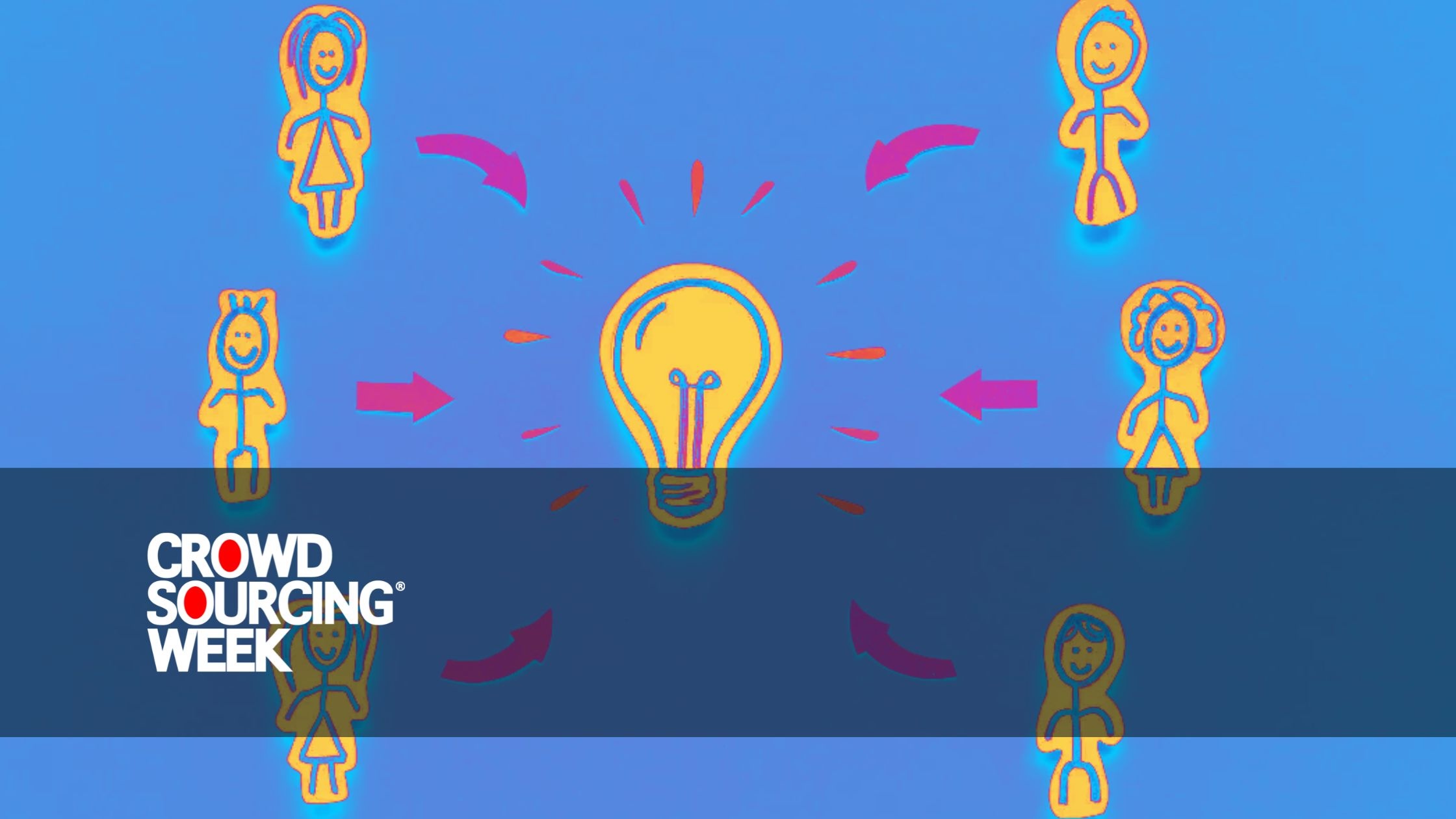
Crowdsourcing ideas are full-on madness in the best possible way. You put a problem out there, and suddenly, hundreds of brains start throwing solutions at it – some smart, some weird, some completely bonkers. And somehow, the perfect answer finds its way through the madness. It is loud and unpredictable, and exactly why crowdsourcing works.
Here, you are about to see 10 crowdsourcing ideas that push their way to the top. Every idea is a small rebellion against the “we know best” mentality, and some of them explode into solutions so obvious you facepalm for not seeing them earlier.
What Is Crowdsourcing?
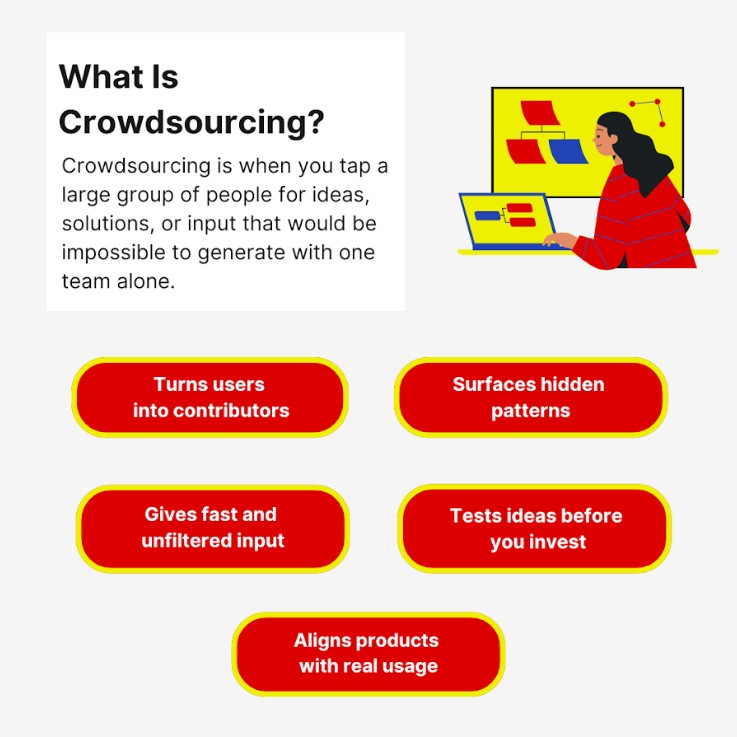
Crowdsourcing is the practice of getting a large group of people – usually from the general public or a community – to contribute innovative ideas, solve business problems, or complete tasks that an individual or organization can’t handle alone.
At its core, crowdsourcing is about harnessing collective intelligence. When fresh perspectives come together, unexpected solutions emerge that no single person or team could have thought of on their own. It turns “many heads” into a practical and results-driven resource for idea generation.
5 Reasons Crowdsourcing Works For Solving Customer Problems
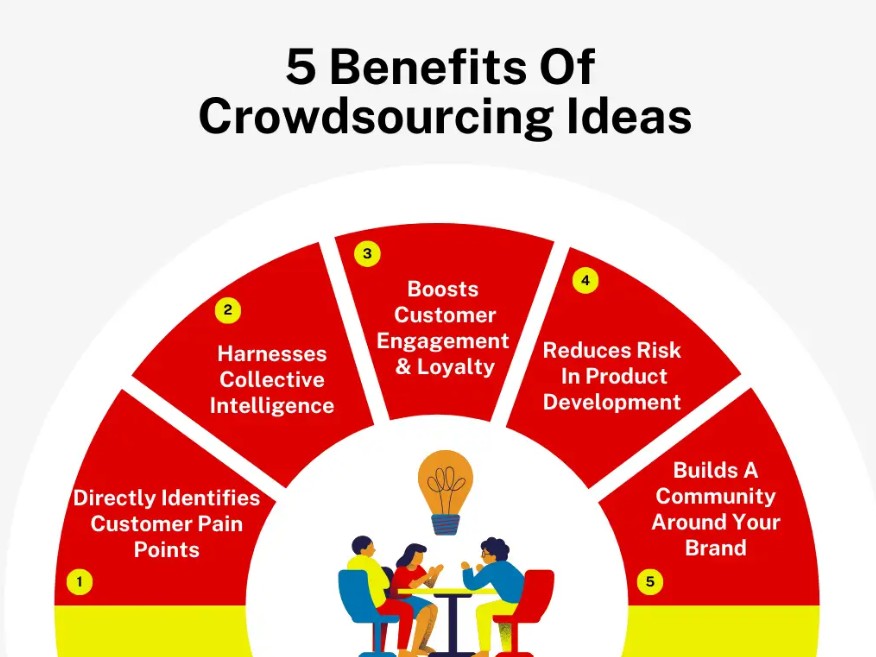
With the crowdsourcing market projected to surpass $154 billion by 2027, it is clear that companies are leaning on customers more than ever for smarter products. These 5 key benefits break down exactly why crowdsourcing can work so well for your business when regular feedback channels slow down or miss the real story.
1. Directly Identifies Customer Pain Points
Crowdsourcing pulls the real issues straight from the people facing them. And customers don’t sugarcoat – they point out the exact things that cause the frustration. And rather than reading between the lines, you get a live feed of what is broken or just plain annoying. The kind of information you can’t manufacture in a meeting or see in analytics.
2. Harnesses Collective Intelligence For Better Solutions
One person’s solution might work. Ten people’s solutions? Now you have a web of new ideas that cover angles you would never think of. Crowdsourcing efforts combine brainpower and creativity in ways your internal team can’t match. It is like having a think tank with infinite diversity, but way faster and way cheaper.
3. Boosts Customer Engagement & Loyalty
When people help fix something, they become part of it. They see their idea actually happening. They brag about it to friends.
And you can’t get that kind of engagement with financial incentives or campaigns – it is earned by letting them have a hand in the product. A crowdsourcing initiative turns casual users into loyal fans and brings repeat purchases without you having to push hard.
4. Reduces Risk In Product Development
Rather than building features that flop or assuming what will work, you gather ideas through a crowdsourcing platform and test them with actual users first. Crowdsourcing is a reality check before you waste resources on something doomed.
In fact, over 60% of organizations use crowdsourcing methods to improve products or streamline services. It reduces costly mistakes and keeps your team focused on innovative solutions that customers actually want.
5. Builds A Community Around Your Brand
When people share ideas or problems, they start talking to each other. Tips get swapped. Stories get told. Those conversations build a self-sustaining community around your brand. People stay around not because of loyalty programs or ads, but because they have a real place here – and they want to keep showing up.
10 Successful Crowdsourcing Ideas Guaranteed To Fix Common Customer Pain Points
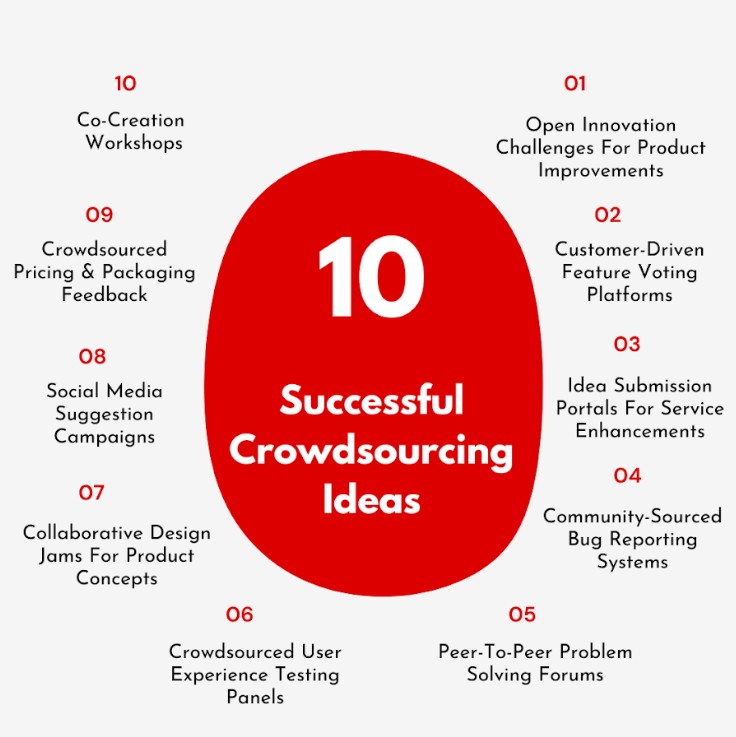
Here are 10 crowdsourcing methods that take raw input and turn it into fixes you can add straight into your product. We will also show you successful crowdsourcing examples that solved global challenges so you can see how this actually works in the real world.
1. Open Innovation Challenges For Product Improvements
Open innovation challenges work like a short burst of collective brainpower aimed at one pain point you want solved right now. You give customers a narrow target for prize money, and they return with creative fixes that come straight from the way they use your product.
This keeps the complex challenge real and accelerates innovation by giving your team upgrades that match customer behavior.
How to Execute:
- Keep the challenge about a single micro-problem – quicker data sync, smoother assembly, faster dashboard loading.
- Ask for a working example, even if rough – a short clip, a clickable mockup, a hacked-together workaround. This lets your team see the idea in motion.
- Run micro-rounds of elimination. Filter entries weekly instead of waiting until the end to keep progress visible and momentum steady.
- Close the challenge with a build session, where you turn the winning idea into a small internal prototype within 48 hours.
Real-World Example:
One of the best crowdsourcing examples of this is the Netflix Prize. Netflix publicly offered $1 million to anyone who could improve its movie recommendation algorithm by at least 10%. Rather than guessing internally how to boost recommendations, Netflix opened the problem up to a worldwide crowd of data scientists and engineers.
Over 40,000 teams competed, each submitting different modeling approaches and iterations until the winning team achieved the target improvement – a leap Netflix arguably would never have developed in the same time frame on its own.
2. Customer-Driven Feature Voting Platforms
A voting platform lets customers rank your features for you. They signal priority through real numbers. This creates a hierarchy of needs by the people who use the product daily, not internal assumptions.
How to Execute:
- Group each feature into a “scenario block” – “team setup,” “exporting,” “mobile access.” This lets voters understand the context instantly.
- Show the performance impact of each feature – time saved, steps removed, screens skipped, cost savings. This pushes customers to vote with purpose.
- Allow only 3 votes per person. This forces them to choose what genuinely matters instead of spraying likes everywhere.
- Archive old winners into a permanent public timeline, so customers can track your execution record without going through announcements.
Real-World Example:
Betabrand is an online apparel company that lets its community vote on design ideas before they become prototypes. Customers and fans submit clothing concepts, which are then posted publicly on Betabrand’s voting board. Users cast votes for their favorite designs, and those with enough support move forward into prototype creation and potential production.
This voting stage creates a quantitative priority list of what the community wants. Betabrand uses this hierarchy to decide which designs merit the company’s time and resources. On average, only about 75% of ideas pass the voting phase, with 25% eliminated early because they didn’t get enough customer backing.
After voting, successful designs enter a crowdfunding phase, but the initial vote itself is the key filter that ensures only customer‑validated ideas proceed.
3. Idea Submission Portals For Service Enhancements
A service-focused idea portal or idea management software turns everyday friction points into solutions your teams can use immediately. Customers describe what went wrong at the exact moment it happened, which gives you the kind of timing and sequence that internal teams rarely see.
How to Execute:
- Ask customers to pin the exact step where the service issue showed up – “checkout stage,” “first login,” “warranty request,” etc.
- Auto-route each idea to a service owner, not a general inbox, so nothing waits forever.
- Add a progress slider (received → reviewing → building → shipped), updated by the service team twice a week.
- Publish an “implementation spotlight” that shows one improvement per month with before/after screenshots or scripts that were changed.
Real-World Example:
The grocery chain Kroger set up an idea submission portal specifically for service pain points. People could flag glitches in checkout, pickup, app ordering, etc. Instead of general “suggestions,” submissions were tagged with exact steps customers struggled with (for example, “pickup time estimation error at payment screen”).
Kroger’s teams auto-routed these suggestions to the correct service owners, so fixes didn’t get lost in a suggestions bucket but went straight to action teams that could ship updates.
4. Community-Sourced Bug Reporting Systems
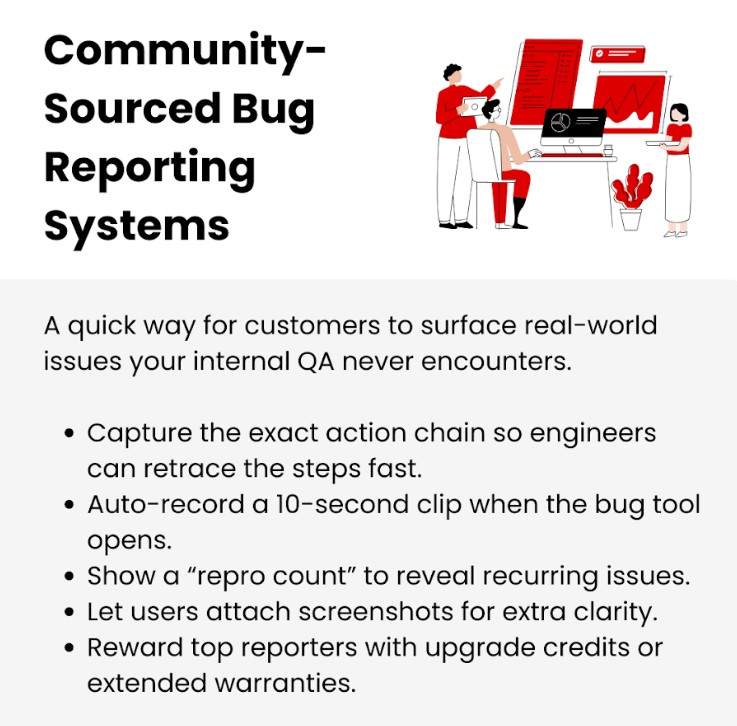
A community bug system gives customers a fast lane to report issues that appear only in real environments – unstable networks, older devices, heavy account loads, or unexpected combinations of actions. These are the bugs that scripted QA never reaches, which makes customer input priceless for companies.
How to Execute:
- Track each bug by the exact action chain, such as “filter → export → rename.” This makes debugging faster and cleaner for engineers.
- Let users attach a 10-second auto-captured clip that is recorded the moment they open the bug tool. This lets you see what led up to the issue.
- Give each bug a “repro count” that shows how many customers hit the same issue. This helps your team spot hidden patterns.
- Reward top monthly reporters with upgrade credits or extended warranties to keep the reporting cycle active and high-quality.
Real-World Example:
GitHub’s community forum is one of the purest examples of crowdsourced bug reporting in action. Users openly post issues tied to exact steps like “merge request freeze after pushing large assets.” The crowd then offers repro steps or patches before engineers weigh in.
GitHub staff tracks the most frequent reports and folds them into sprint planning so bugs found in the wild actually shape roadmap priorities. This reduces repetitive support tickets and surfaces real user-environment issues that QA didn’t catch.
5. Peer-To-Peer Problem Solving Forums
This is basically giving customers a place to talk to each other about problems and hacks – and you quietly walk behind them, taking notes. Customers usually discover shortcuts and explanations that your support team never thought of. When they help each other, you get raw intel about where people struggle and how they naturally solve problems.
How to Execute:
- Create simple discussion categories like “Quick Fixes,” “Workarounds,” or “Feature Tricks” instead of heavy technical labels.
- Assign a moderator who jumps in only when needed. This keeps the conversation customer-led and authentic.
- Pin the threads that expose recurring friction points – those become your immediate improvement backlog.
- Add a “customer-solved” tag on threads where users fix an issue better than your documentation, then study those crowdsourcing solutions internally.
Real-World Example:
Stack Overflow is the ultimate peer support forum for software developers – it is literally customer-to-customer problem solving at scale. Developers post exact scenarios (e.g., a snippet of code that fails under certain conditions) and the community provides answers with detailed rationale.
Over time, the most effective solutions get upvoted and pinned. This creates a living system of fixes that informs product teams about patterns of pain (like common pain points in a language runtime), which then feeds back into product improvements. This is raw peer-discovery that reveals real technical friction patterns your internal teams might never see otherwise.
6. Crowdsourced User Experience Testing Panels
A crowdsourced UX panel shows you the exact places real customers hesitate or repeat steps. You watch people using your product in the context of their actual workflow, which exposes gaps that internal testers never find.
How to Execute:
- Recruit testers based on navigation style – shortcut-heavy, step-by-step, search-first users. This reveals different friction points.
- Give testers one small update at a time, like a new button placement or a rewritten prompt, to keep the feedback focused and crisp.
- Track the time-to-complete for each task, then compare it against your internal benchmark to find hidden slow spots.
- Hold a “pattern review” at the end of each panel, where you map repeated hesitation points to specific interface adjustments.
Real-World Example:
EXT Cabinets used a rotating UX testing panel made up of actual customers. They sent panelists a live staging link of their configurator and watched customers try to build a layout the same way they would in real life.
During one test round, EXT saw something internal testers completely missed: shoppers kept reopening the “material samples” drawer on the page because they couldn’t remember which finish they picked after switching colors repeatedly.
That hesitation pattern pushed EXT to add a persistent “Selected Finish” label right next to the canvas. Another round revealed that shortcut-driven users repeatedly tapped the keyboard’s arrow keys expecting to rotate cabinets, so EXT added a small keyboard-friendly nudge control. Changes like these came directly from the crowd, not from internal assumptions.
7. Collaborative Design Jams For Product Concepts
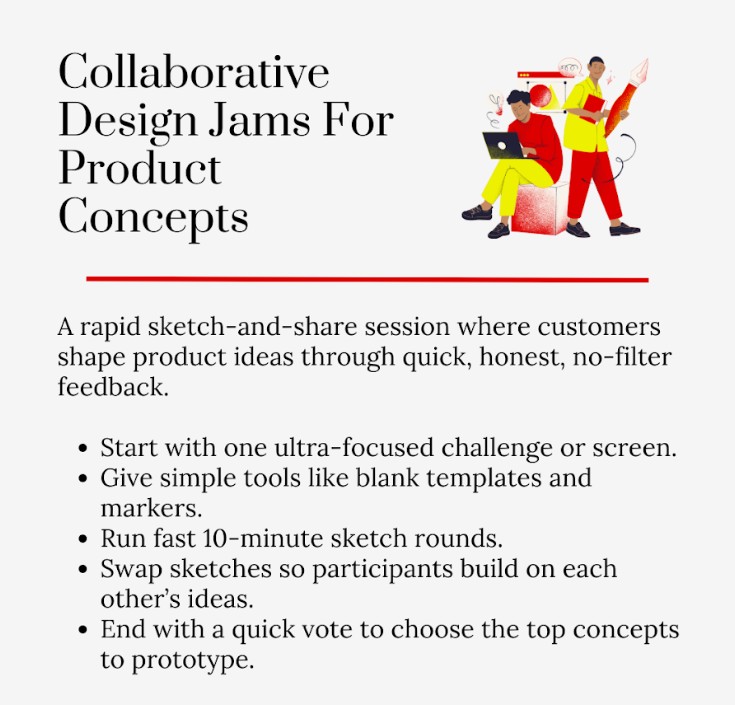
No, a design jam is not a workshop. It is a fast-moving session where customers share ideas and sketch rough concepts to help you shape product directions without overthinking. And today’s participants are different – with the number of people holding four years of college increasing from 5% to 33%, they don’t hide behind slides or specs.
That is exactly why it works so well. You get insights from a more educated and discerning audience than ever, and you can turn that raw input into practical prototypes the same day.
How to Execute:
- Start the jam with a single but super-focused challenge – one screen, one workflow, one thing that always confuses people.
- Give participants basic tools – blank templates, Sharpies, sticky notes, digital canvases. Simple is better here.
- Run 10-minute rounds where people sketch their best ideas fast. Then swap sketches and build on each other’s concepts.
- End with a voting round where everyone picks the top 2 concepts to prototype immediately after the session.
Real-World Example:
A great example can be found in how design teams at IBM use “design jam” events – not just internal meetings, but structured, rapid sessions where real users and designers tackle a specific problem in a short block of time.
During these jams, participants split into small groups, sketch ideas, swap concepts, and vote on the ones that show real promise. They are focused, hands‑on creative bursts where customer reactions decide what gets picked and prototyped next.
This method helped teams at IBM break through long development cycles and generate practical and user‑validated design options early.
8. Social Media Suggestion Campaigns
This is where you treat social platforms like a big open suggestion box, but way more lively.
People already complain, recommend, praise, rant, and brainstorm publicly – you are simply tapping into that energy with structure. Rather than pushing posts, you are collecting ideas and external knowledge in a place where customers are already talking and already reacting instantly.
How to Execute:
- Drop a short prompt that sounds natural, like “If you could change one tiny thing about our product this week, what would it be?”
- Track replies manually for the first few days so you find unexpected ideas that automated tools might miss.
- Create a weekly highlight reel of your crowdsourcing campaign (one story, one carousel, one pinned post) showing the smartest suggestions you are acting on.
- Use separate hashtags for each topic so you can surface clusters later – product, service, onboarding, speed, convenience.
Real-World Example:
Start in Wyoming ran a month-long idea-gathering sprint on Instagram and Facebook specifically for small business owners. They dropped a quick prompt in Stories: “If you could get one resource faster this month, what would it be?”
The replies were fast – restaurant owners wanted a simpler licensing checklist while home-based businesses wanted clearer tax guidance. The firm collected these replies manually for the first 3 days, screenshotting useful ones and grouping them into themes.
That manual pass surfaced dozens of small but sharp suggestions that automated tools would have skipped. They then shared a simple “You spoke, we’re on it” carousel every Friday that showed which suggestions they were already building out, including a micro-directory of accountants who specialize in early-stage founders.
9. Crowdsourced Pricing & Packaging Feedback
This isn’t about asking customers “Is this price okay?” You have to find out where confusion or frustration shows up. Customers usually reveal odd sticking points – not the price itself, but unclear tiers or packaging that makes no sense in their daily routine. Their wording ends up guiding how you create a sales pitch that actually clarifies value instead of burying it.
How to Execute:
- Show customers actual side-by-side mockups of pricing or packaging options so they react to something concrete, not abstract ideas.
- Ask them to point out the exact moment that feels expensive or inconvenient – don’t ask for overall ratings.
- Track the phrases customers use repeatedly – “too many steps,” “can’t compare easily,” “why is this separate.”
- Adjust one variable at a time — just the label, just the order, just the bundle. Then run quick micro-tests to isolate what improves clarity.
- Hire a financial strategist who can set the range for how far you can push a price drop or feature shift during micro-tests.
Real-World Example:
CodaPet wanted to refine how they presented at-home end-of-life care packages. They asked families to react to real screens by showing side-by-side mockups of three package formats: “Care Visit,” “Comfort Plan,” and “Full Support.”
A pattern surfaced immediately during crowdsourced testing – people were confused by the order of the packages. Customers said things like “I don’t know which one I’m supposed to start with” or “This looks like I need all three.”
CodaPet isolated variables and tested again, simply reordering the packages from smallest to largest. Suddenly, customers understood the structure without extra explanation.
Another insight came from repeated phrases such as “too similar” and “unclear difference.” That pushed CodaPet to rewrite each package summary using real-world situations instead of feature lists, like “for sudden needs” or “for ongoing guidance.” The new layout came straight from the crowdsourced reactions, and it reduced clarification calls.
10. Co-Creation Workshops
Co-creation workshops bring customers into the room as part of the build team. It is not brainstorming. You roll up your sleeves and work on the actual solution with them. This works because customers see practical problems instantly – things your team overlooks because you are too close to the product.
How to Execute:
- Invite a balanced mix of customers based on diverse backgrounds and specific behaviors – heavy users, new users, frustrated users.
- Break the workshop into short cycles. Discuss the problem, sketch a fix, refine it, then turn it into a simple prototype.
- Let customers narrate how they would use the product idea in real life. Record every detail.
- End with a shortlist of concepts assigned to actual owners on your team, with a promised timeline for first tests.
Real-World Example:
DHL’s customer innovation workshops are one of the clearest uses of co‑creation workshops with actual customers. DHL brings real customers (logistics managers from client companies) into structured sessions where they sketch out solutions and build ideas together with DHL staff.
In these workshops, customers and DHL engineers actually co-design new service solutions – one of the outputs being Parcelcopter, an autonomous drone concept for delivering packages in tricky terrain. Participants directly shaped the solution concept with the team, and DHL then took it forward towards testing and refinement.
Conclusion
Crowdsourcing ideas gives you patterns that don’t surface in complaints that customers won’t bother opening tickets for. Nothing else gives you that range or that honesty.
So here’s the advice that actually matters – don’t build a big system around this. Build a rhythm. Let every idea settle somewhere specific. Let every submission trigger the next step. The payoff is a product that is smarter and built for the real world.
Crowdsourcing Week brings together people from different backgrounds who are actually doing these things – innovators, entrepreneurs, product builders, executives, community leaders, and even global brands – all in one space to share what is working now and what is next in the crowd-driven world. What are you doing in the collaborative crowd space? Please let us know, and add to the discussion.

0 Comments